

January 29, 2026
How white-label cards are transforming modern funds disbursement
Discover how branded card programmes help organisations deliver funds faster, improve customer experience, and strengthen brand visibility.


Funds disbursement underpins many day-to-day operations across the EEA, including employee benefits, travel refunds, customer rewards, gift cards and grant payments. Expectations have shifted quickly. Recipients now expect funds to be delivered instantly in a secure and convenient form, while organisations need reliable processes that remain compliant and consistent with their brand.
Traditional payout methods such as bank transfers or cheques often fall short. They can be slow, difficult to track and limited in flexibility. According to the World Bank, “Digital payments improve efficiency, transparency and security in the distribution of funds.” As digital payments become standard across Europe, organisations are looking for faster and more controlled ways to move money.
This is where white-label cards for funds disbursement are becoming a preferred option. By issuing physical or virtual payment cards that carry their own branding, organisations can deliver funds instantly while staying in control of the user experience. Card-based disbursement combines speed, security and transparency with the added benefit of brand visibility.
In the sections that follow, we explore how white-label card programmes work, the advantages they bring across different sectors and what to consider when implementing a card-based disbursement solution.
What are white-label cards?
White-label cards are payment cards that carry an organisation’s own branding rather than that of the issuing provider. They can be either physical or virtual, and are backed by a licensed financial institution that manages compliance, technology and settlement. The organisation controls the look and feel of the cards and the user experience, while the issuer provides the secure infrastructure that makes the funds disbursement work.
In practice, this means businesses can offer fully branded cards to customers, employees or other beneficiaries without needing to become a financial institution themselves.
Funds can be preloaded, topped up or distributed instantly, and recipients can spend in stores, online or through digital wallets just as with any other payment card.
For organisations involved in high-volume or regular payouts, this approach combines the speed and convenience of modern digital payments with full brand visibility. Whether used for staff incentives, customer refunds, travel allowances or gift programmes, branded payment cards give businesses an efficient and flexible way to manage disbursements while keeping their brand front and centre.
Why white-label cards are changing funds disbursement
Traditional disbursement methods such as bank transfers or vouchers often involve delays, manual processing and limited flexibility. Recipients may wait days for funds to clear or face restrictions on how and where they can use them. For organisations managing large volumes of payouts, these limitations can create unnecessary cost, inefficiency and frustration.
White-label cards offer a more agile and connected alternative.
Funds can be loaded and accessed instantly, with full visibility over when and how payments are made. Because the underlying infrastructure is already compliant with PSD2 and other EEA regulations, organisations benefit from a ready-made framework for secure and traceable transactions.
White-label cards turn a purely functional process into a branded experience.
Every card carries the organisation’s identity and reinforces trust each time it is used. This combination of speed, compliance and brand visibility is why white-label cards are becoming a preferred choice for modern funds disbursement.
Organisations operating funds disbursement cards also gain control.
Card programmes can include built-in spending rules, limits and transaction monitoring to help businesses meet internal policies and regulatory standards. This makes white-label cards particularly suitable for organisations that need to distribute funds responsibly, such as managing allowances, rewards or compensation in a transparent way.
With real-time tracking and reporting tools, organisations can monitor usage of the cards, ensure compliance and understand spending patterns. This not only helps to control costs but also helps organisations analyse the effectiveness of their funds disbursement programme.
Key benefits of using white-label cards for payouts
White-label cards bring together the flexibility of digital payments with the control and visibility organisations need. They simplify the funds disbursement process while improving the experience for both sender and recipient. Some of the key benefits include:
1. Data insights
Experienced funds disbursement platforms such as DiPocket enable you to fully integrate the management of customised cards into a powerful administrative portal, allowing organisations to analyse customer behaviour and tailor their services accordingly. This data-driven approach can significantly enhance customer engagement and loyalty.
Importantly, the customer relationship with the end user remains with the organisation, not the card issuer or provider, so any user data collected will be under the organisation’s control.
2. Operational efficiency
Automation reduces manual processing and reconciliation. Funds can be distributed at scale through an online dashboard or API, allowing finance teams to manage payouts quickly and accurately.
3. Instant access to funds
Recipients can use their cards immediately after funds are loaded, whether for online purchases, in-store payments or ATM withdrawals. This helps organisations deliver on the growing expectation for instant disbursement. Across Europe, Instant payments are becoming the new normal for consumers and businesses.
“With the spread of smartphones and electronic commerce, the digitalisation of the economy entails a general acceleration of payments,” states the European Payments Council. “Customers make internet purchases anywhere and at any time, including during evening hours, weekends and holidays – periods when most traditional electronic payments are not operational. Suppliers, on the other hand, want the certainty of being paid as soon as they sell their goods and services.”
4. Improved user experience
Card-based disbursement removes the waiting and uncertainty of traditional methods. Recipients receive a familiar payment method that integrates easily with mobile wallets and online platforms.
5. Multi-currency capability
For organisations working across borders, white-label card programmes can handle multiple currencies, reducing the complexity of international payments and conversion fees.
6. Compliance and security
Working with a licensed issuer ensures the card programme operates within the required PSD2 and AML/KYC frameworks. Transaction controls can be built in to meet both regulatory and internal policy requirements.
7. Brand visibility
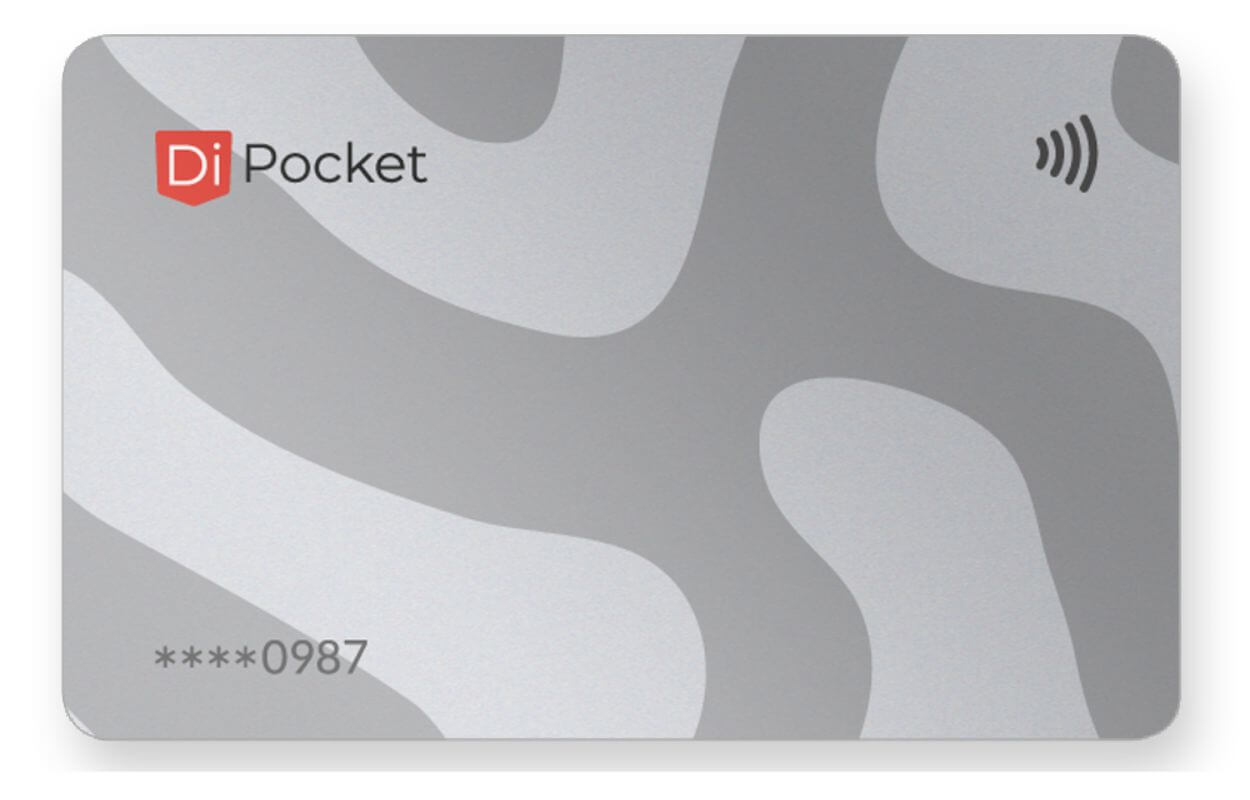
Each card carries the organisation’s design and logo, turning every payment into a brand interaction. This consistent presence helps build trust and recognition over time.
Together, these advantages make white-label cards a practical solution for organisations that need to distribute funds quickly and securely while maintaining full control of their brand and user experience.
Read more about DiPocket’s funds disbursement solutions here.
Use cases across industries
White-label cards are versatile tools that can be adapted to many sectors where funds need to move quickly and securely. They allow organisations to simplify disbursement processes while maintaining brand presence and control. Common examples include:
Employee benefits and payroll
Companies can distribute bonuses, expenses or incentive payments directly onto branded cards. Employees gain immediate access to funds and HR teams save time on manual transfers. Click to find out more about branded employee benefits payment cards.
Gift and reward programmes
Retailers and service providers can issue branded prepaid cards for customer rewards, loyalty schemes or promotional giveaways. Each card acts as a marketing touchpoint that encourages repeat engagement. Read more about our branded company gift cards here.
Loan disbursements
Quickly issue loan funds to recipients in multiple countries with prepaid physical or virtual cards in their local currency, even if they have no bank account. Click here for more information on loan disbursements using white-label cards.
Travel and hospitality
Businesses can issue cards to manage travel allowances, customer compensation or refunds, giving recipients fast access to funds in the currency they need.
Education and grants
Schools, universities and funding organisations can provide bursaries or scholarship payments on branded cards, ensuring students receive their funds safely and can track their spending.
Corporate payouts and refunds
Businesses handling frequent reimbursements or refunds can use branded cards to speed up delivery and reduce reliance on bank transfers.
Organisations such as the UNHCR use white-label cards to distribute funds to refugees:
“That means we can track and trace the money. We follow spending patterns and the effect the money has on households, so we and our partners gather data on who is getting it, what they spend it on, and how it helps. All this information is rigorously collected, checked and shared with donor countries. In short, survival funding is secure, mostly digital, trackable and measurable.”
UNHCR Post-distribution Monitoring Report 2024
This approach offers transparency and accountability while enabling quick deployment of funds in multiple regions. Cash assistance delivered through prepaid cards provides a safe and dignified way to support displaced people.
The brand advantage: turning disbursement into engagement
Traditional funds disbursements are often invisible to the recipient. A bank transfer arrives with little connection to the organisation that sent it, offering no opportunity to reinforce trust or recognition. White-label cards change that dynamic by turning every payment into a visible, branded interaction.
When recipients use a card that carries your name and design, they associate the convenience of instant access with your organisation, not a third-party issuer. This simple visual connection builds familiarity and strengthens brand perception and loyalty over time. It also helps create consistency across physical and digital experiences — whether a recipient receives a physical card in the post or accesses their balance through a virtual card using a branded mobile app.
For customer-facing organisations, branded payment cards can also encourage repeat engagement. For example, a gift or reward card may prompt a return purchase, while an event card can serve as a reminder of a positive experience. Even for internal use, such as staff benefits or expense management, having the company brand on the card adds a sense of ownership and professionalism.
By combining financial functionality with brand visibility, white-label cards allow organisations to transform a routine transaction into a moment of connection that reinforces identity, reliability and trust.
Compliance and trust: choosing the right issuing partner
Behind every successful white-label card programme is a regulated and experienced issuing partner.
Partnering with the right provider is essential, particularly for organisations operating across multiple EEA markets where compliance and data protection are closely monitored.
A licensed white-label card issuer ensures that the card programme meets all relevant requirements, including PSD2, AML and KYC regulations. This means funds are safeguarded, transactions are monitored and customer data is handled securely.
Working with an established partner also removes the need for your organisation to hold its own e-money or payment licence, reducing both cost and complexity.
Trust is another critical factor. A strong payment card issuing partner provides transparent reporting, clear reconciliation processes and ongoing support, giving organisations full visibility over how funds are distributed and used. For businesses managing disbursement at scale, this reliability helps protect their reputation while maintaining confidence among stakeholders and recipients.
Choosing a partner with proven experience across the EEA – one that combines technical infrastructure with regulatory expertise – allows organisations to launch their card programmes quickly and safely, confident that every transaction meets the highest standards of compliance and security. DiPocket provides leading edge corporate payment solutions: a fully managed platform giving organisations control of payments, supported by comprehensive security, technical and financial checks.
How to implement a white-label card programme
Introducing a white-label card programme can be straightforward with the right partner. The process typically follows a few key stages, allowing organisations to design, launch and manage their programme efficiently while staying compliant.
1. Define your objectives
Begin by identifying the purpose of your card programme and who it will serve. This could be to simplify customer refunds, streamline employee payments, distribute event funds or support beneficiaries. Understanding these goals will shape the card features, limits and reporting you need.
2. Choose a regulated issuing partner
Select an issuer with the appropriate licences, experience and technical capability to operate across your markets. A trusted funds disbursement partner such as DiPocket provides the regulatory framework and platform to manage the entire process securely.
3. Customise your branding and functionality
Design your card to reflect your brand, from the logo and colour scheme to how users access their balance or transaction history. You can also define rules such as spending categories, top-up options and currency support.
DiPocket supplies your choice of virtual or physical payment cards, all carrying your branding. The cards are authorised by Mastercard or Visa and can be used online, in-store or via mobile wallets.
They integrate seamlessly with Google Pay™ and Apple Pay™, allowing recipients to tap to pay securely with their Android or iOS devices.
All card designs must be approved by Mastercard or Visa before production. DiPocket manages this process on your behalf, providing expert guidance to ensure designs meet the required standards and pass approval smoothly.
4. Integrate your systems
Use an API or online portal to connect your internal systems with the card platform. This allows for automated loading, monitoring and reporting, making it easy to scale as your needs grow.
5. Launch and monitor performance
Once the programme is live, use analytics and reporting tools to track activity, identify trends and ensure continued compliance. A responsive issuing partner can help adjust settings or limits as requirements evolve.
With these steps in place, organisations can implement a flexible and efficient card-based funds disbursement system that enhances both operational performance and brand experience.
Funds Disbursement that strengthens your brand
White-label cards are changing how organisations deliver funds. They offer a faster, more secure and more flexible alternative to traditional payout methods while keeping the organisation’s brand at the centre of each transaction. By combining instant access to funds with clear reporting, strong compliance and a consistent user experience, white-label cards provide a modern approach to disbursement across the EEA.
Whether used for staff benefits, customer refunds, event payments, gift cards or charitable aid, branded payment cards help organisations improve the experience for recipients while maintaining control over how funds are distributed and spent. They also support stronger brand recognition, as every card use reinforces trust and familiarity.
With an experienced issuing partner such as DiPocket, organisations can launch their own Mastercard- or Visa-approved card programme quickly and confidently. The result is a scalable funds disbursement solution that does more than move money. It strengthens relationships, supports brand visibility and delivers a seamless experience for every recipient.
Contact us now to discuss how your organisation can benefit from branded payment cards.
Frequently asked questions (FAQs)
1. What are white-label cards used for in funds disbursement?
White-label cards allow organisations to distribute funds instantly while keeping their brand visible. They can be used for staff benefits, refunds, rewards, travel allowances, gift cards, grants and charitable aid.
2. How do white-label cards compare with traditional bank transfers?
White-label cards provide instant access to funds and clear spending controls, whereas bank transfers can be slower, harder to track and less flexible for recipients.
3. Can white-label cards be issued as virtual cards?
Yes. White-label cards can be supplied as physical or virtual cards. Virtual cards can be used for online purchases or added to mobile wallets such as Google Pay™ and Apple Pay™.
4. Are white-label cards accepted everywhere?
DiPocket issues Mastercard- or Visa-approved cards, which are accepted worldwide wherever those networks operate, both online and in stores.
5. Do white-label cards work with mobile wallets?
Yes. DiPocket’s branded cards can be integrated with Google Pay™ and Apple Pay™ so recipients can tap to pay securely using Android or iOS devices.
6. What controls can organisations set on white-label cards?
Businesses can define spending limits, allowed merchant types, top-up rules and currencies. This helps them manage compliance and ensure responsible distribution of funds.
7. Can organisations issue white-label cards without their own financial licence?
Yes. By working with a regulated issuing partner such as DiPocket, organisations can launch a fully compliant programme without holding their own e-money or payment licence.
8. Are white-label cards suitable for people without a bank account?
Yes. Prepaid white-label cards offer a secure way to distribute funds to individuals who do not have traditional banking access, making them suitable for NGOs and aid programmes.
9. How long does it take to launch a white-label card programme?
Timelines vary, but with an experienced partner the process is streamlined. DiPocket supports design approval, card production, integration and onboarding to ensure a smooth launch.
10. What data insights can organisations gain from white-label card programmes?
Through DiPocket’s administrative portal, organisations can monitor usage, track spending patterns and analyse customer behaviour to improve services and engagement.
RELATED ARTICLES
Guides
Loan disbursement

September 11, 2025
Loan disbursement explained
A complete guide to digital loan disbursement for fintechs and lenders.
Payment Solutions
Loan disbursement

March 25, 2025
Quick and simple loan disbursement for lenders
Looking for a faster, easier way to disburse loans and manage repayments? DiPocket’s white label cards offer a seamless, secure solution.
Products & Services
Payment cards
August 28, 2024
Branded payment cards improve customer loyalty
Branded payment cards can be a great asset for your business. Your main aim may be to streamline financial solutions, but branded payment cards can also offer an innovative way to retain customers and improve brand loyalty.