

April 15, 2026
What is a BIN in payment card issuing?
For: fintech product and BD leads, PSPs, payment programme managers.
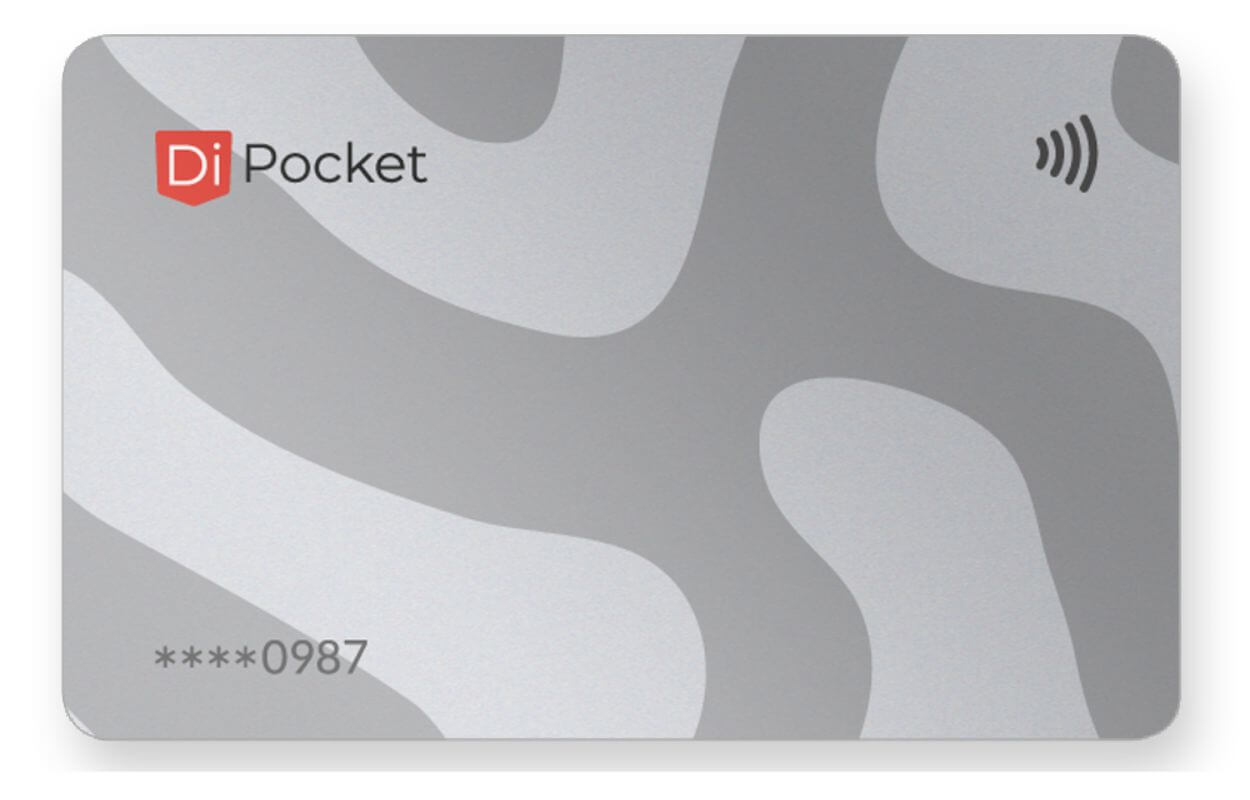
A Bank Identification Number (BIN) is the first six to eight digits of a payment card number. These digits identify the institution that issued the card and determine how the transaction is routed through the card scheme network. In payment card issuing, the BIN is the foundational identifier that connects every card transaction back to the issuing institution – and in BIN sponsorship arrangements, back to the regulated entity that holds scheme membership on the client’s behalf.
On this page:
- What does BIN stand for, and is it the same as IIN?
- How many digits is a BIN, and why did it change from six to eight?
- What information does a BIN contain?
- How does a BIN work during a payment card transaction?
- Who assigns and owns a BIN?
- What is the difference between a shared BIN and a dedicated BIN?
- How does a BIN relate to BIN sponsorship?
- What is a BIN range?
What does BIN stand for, and is it the same as IIN?
Answer
BIN stands for Bank Identification Number. IIN stands for Issuer Identification Number. They refer to the same digits on a payment card. BIN is the older and more widely used term; IIN is the technically correct modern term.
Why the terminology changed
The term BIN dates from an era when only banks issued payment cards. As non-bank entities – including fintechs, electronic money institutions and payment service providers – began issuing cards under their own brands, the term Bank Identification Number became a misnomer. ISO updated its standard (ISO/IEC 7812) to use Issuer Identification Number as the official term, reflecting the reality that the issuing institution is not always a bank.
In practice, the industry continues to use BIN almost universally. Both terms appear in scheme documentation, processor agreements and commercial conversations. For fintechs and PSPs working with a BIN sponsor in Europe, the sponsor is the regulated issuer whose BIN appears on the cards – whether that sponsor is a bank or, as is common in the EU, an authorised electronic money institution.
What to watch for
- Agreements and scheme documentation may use BIN and IIN interchangeably – treat them as the same thing.
- Some processors use IIN in their technical documentation even when the commercial term used is BIN.
How many digits is a BIN, and why did it change from six to eight?
Answer
A BIN is six to eight digits. The expansion from six to eight digits was mandated by Visa and Mastercard in April 2022 in response to a projected shortage of available six-digit combinations caused by the rapid growth in the number of payment card-issuing institutions globally.
Why the expansion happened
Six-digit BINs support a finite number of unique combinations. As the number of card-issuing institutions grew, driven in part by the expansion of fintech payment card issuing under BIN sponsorship arrangements, ISO projected that the supply of available six-digit BINs would be exhausted. ISO/IEC 7812-1 was revised in 2017 to extend the standard from six to eight digits, and Visa and Mastercard required all acquirers and processors to accommodate eight-digit BINs by April 2022.
An eight-digit BIN creates a sufficiently large namespace to accommodate continued issuance growth well into the future. The expansion did not change card numbers themselves, as PANs remained the same total length. Only the portion classified as the BIN grew.
What this means in practice for payment card programmes
All new BINs assigned by Visa and Mastercard since April 2022 are eight digits. Existing six-digit BINs continued in use during a transition period. For a business launching a new card programme today, its BIN will be eight digits.
What to watch for
- If you are migrating an existing payment card programme, confirm whether your current BIN is six or eight digits.
- The expansion of the BIN did not change the total length of the Primary Account Number (PAN) – the card number itself remains the same length.
What information does a BIN contain?
Answer
A BIN identifies the payment card scheme (Visa, Mastercard and so on), the issuing institution, the card type (credit, debit, prepaid), and in some cases the country of issuance and card product level. It does not contain any personal data about the cardholder.
Breaking down what the digits tell you
The first digit of a BIN is called the Major Industry Identifier (MII). It identifies the broad category of the issuing institution. For payment cards, Visa cards typically start with 4 and Mastercard cards with 5 (or 2 for newer Mastercard ranges). The remaining digits identify the specific issuing institution and, within that, the card product type.
For a fintech or PSP operating under BIN sponsorship, the BIN identifies the sponsor – the regulated EMI or bank that holds scheme membership – not the client business whose brand appears on the card. This is an important distinction: the cardholder’s card carries the client’s brand, but the BIN resolves to the sponsor.
What a BIN does not reveal
A BIN does not contain or expose any cardholder personal data. It does not identify the individual account, the cardholder’s name, their account balance, or any transaction history. It identifies the institution and the card product type only. The individual account is identified by the digits that follow the BIN within the full PAN.
In a BIN sponsorship arrangement, the authorisation of every card transaction flows through the sponsor’s infrastructure, not directly through the client’s systems. The sponsor’s authorisation platform handles real-time approval decisions, applies programme-level spend controls, and passes settlement data back to the client. Understanding this is material to programme design, performance expectations, and risk allocation.
Where the sponsor sits in the authorisation chain
When a cardholder presents a card, the transaction is routed to the issuing institution identified by the BIN – which in a sponsored programme is the sponsor, not the client. The sponsor’s authorisation platform applies the card’s spend rules, fraud logic and account status checks before returning an approval or decline. The client’s brand is on the card, but the sponsor’s infrastructure is making the authorisation decision.
This is why the sponsor’s authorisation infrastructure – its uptime, its authorisation rate performance, its real-time fraud capability – should be treated as a core evaluation criterion, not a technical detail. A sponsor with weak infrastructure will generate avoidable declines and cardholder friction regardless of how well the programme is designed.
What to watch for
- Ask your prospective sponsor for their authorisation uptime SLA and historical authorisation rate data across programmes similar to yours. These are material commercial metrics, not technical footnotes.
- Understand which spend control parameters are configurable by you in real time versus those that require a change request to the sponsor. Real-time configurability matters for programmes with dynamic or recipient-specific rules.
- Ask whether the sponsor operates their own authorisation platform or relies on a third-party processor for authorisation decisions. Each additional intermediary is a potential point of latency or failure.
- Spend controls configured at programme level – such as merchant category restrictions or per-transaction limits – are applied during the authorisation step by the issuing institution. Understanding where these controls are applied is important when designing your card programme.
- Transaction decline rates and authorisation performance depend on the sponsor’s processing infrastructure as well as the card scheme’s network. Ask about authorisation rates and uptime guarantees when evaluating a BIN sponsor.
How does a BIN work during a payment card transaction?
Answer
In a BIN sponsorship arrangement, the authorisation of every payment card transaction flows through the sponsor’s infrastructure, not directly through the client’s systems. The sponsor’s authorisation platform handles real-time approval decisions, applies programme-level spend controls, and passes settlement data back to the client. Understanding this is material to programme design, performance expectations, and risk allocation.
Where the sponsor sits in the authorisation chain
When a cardholder presents a card, the transaction is routed to the issuing institution identified by the BIN – which in a sponsored programme is the sponsor, not the client. The sponsor’s authorisation platform applies the card’s spend rules, fraud logic and account status checks before returning an approval or decline. The client’s brand is on the payment card, but the sponsor’s infrastructure is making the authorisation decision.
This is why the sponsor’s authorisation infrastructure – its uptime, its authorisation rate performance, its real-time fraud capability – should be treated as a core evaluation criterion, not a technical detail. A sponsor with weak infrastructure will generate avoidable declines and cardholder friction regardless of how well the programme is designed.
Where spend controls are applied
Spend controls – merchant category restrictions, per-transaction limits, geography locks, time-of-day rules – are configured at programme level and applied by the sponsor’s platform during the authorisation step. If a transaction does not match the configured rules, it is declined at authorisation before it reaches settlement. This means the reliability and granularity of the sponsor’s spend control capability directly determines how precisely you can govern cardholder behaviour in real time.
What to watch for
- Ask your prospective sponsor for their authorisation uptime SLA and historical authorisation rate data across programmes similar to yours. These are material commercial metrics, not technical footnotes.
- Understand which spend control parameters are configurable by you in real time versus those that require a change request to the sponsor. Real-time configurability matters for programmes with dynamic or recipient-specific rules.
Ask whether the sponsor operates their own authorisation platform or relies on a third-party processor for authorisation decisions. Each additional intermediary is a potential point of latency or failure.
Who assigns and owns a BIN?
Answer
BINs are assigned by the payment card schemes – Visa and Mastercard – to regulated issuing institutions that hold principal membership of the scheme. A BIN is the property of the scheme and the issuing institution. A fintech or PSP operating under BIN sponsorship does not own or hold a BIN directly; they operate within a BIN or BIN range assigned to their sponsor.
How BINs are assigned in practice
When a regulated institution such as an Electronic Money Institution becomes a principal member of Visa or Mastercard, it applies to the scheme for one or more BINs. The scheme assigns BINs based on the institution’s programme requirements, card types and geographies. The institution then owns those BINs for the purposes of card issuance.
Under BIN sponsorship, the sponsor allocates a BIN or a BIN range to the client programme. The sponsor retains ownership and scheme-level accountability for the BIN. The client operates within the parameters set by the sponsor and the scheme.
Who holds the BIN in the EU
In the EU, BINs are held by institutions authorised to issue electronic money – typically Electronic Money Institutions (EMIs) or banks with scheme principal membership. The Bank of Lithuania and the FCA are the two primary regulatory authorities licensing EMIs in the EU and UK respectively. DiPocket holds BINs under its principal membership of both Visa and Mastercard, enabling it to sponsor programmes across 15 European markets.
What to watch for
- If you are evaluating a BIN sponsor, confirm that the BINs they are offering are registered in their name with the scheme – not sub-leased from another institution. Each layer of intermediary adds complexity and potential risk.
- The scheme’s own records are the authoritative source on BIN ownership. A legitimate sponsor will be transparent about their BIN holdings and scheme membership status.
What is the difference between a shared BIN and a dedicated BIN?
Answer
A shared BIN is one where multiple client programmes operate within the same BIN, distinguished by sub-ranges within the full card number. A dedicated BIN is one assigned exclusively to a single programme. Dedicated BINs offer greater control and isolation; shared BINs are faster and lower cost to access, particularly at launch.
Shared BINs
Under a shared BIN arrangement, multiple clients of the same sponsor operate using sub-ranges within a single BIN. The full card number (PAN) is unique to each card and each account, so there is no risk of account collision. However, the BIN itself resolves to the sponsor and is shared with other programmes.
The main practical risk of a shared BIN is that the conduct of other programmes sharing the same BIN can affect your programme. If another programme on the same BIN has elevated fraud rates, some merchants or acquirers may block the BIN entirely, which would affect all programmes using it. This is rare but has occurred.
Dedicated BINs
A dedicated BIN is assigned exclusively to one programme. It offers complete isolation from other programmes, full control over the BIN’s reputation, and the ability to configure scheme-level settings without affecting other clients. Dedicated BINs are standard for larger or more established programmes.
Dedicated BINs require a direct scheme registration and typically involve higher fees and longer setup timelines than shared BINs. For a business launching a card programme for the first time, starting on a shared BIN and migrating to a dedicated BIN as the programme grows is a common and sensible path.
Shared BIN vs dedicated BIN: how they compare
| Factor | Shared BIN | Dedicated BIN |
| Time to launch | Faster – sub-range allocation only | Longer – scheme registration required |
| Cost | Lower – no BIN registration fee | Higher – scheme fees apply |
| Isolation | Shared with other programmes | Exclusive to your programme |
| Fraud risk exposure | Other programmes on BIN can affect yours | Fully isolated |
| Control | Programme-level only | Full BIN-level control |
| Best for | Early-stage or lower-volume programmes | Established or higher-risk programmes |
What to watch for
- Ask your BIN sponsor how they screen other programmes sharing a BIN and what their fraud monitoring capability is across shared BIN clients.
- If you are considering a shared BIN arrangement, ask specifically which other types of programme share your BIN – a BIN shared with high-risk card products carries more exposure than one shared with low-risk corporate card programmes.
- Migrating from a shared to a dedicated BIN later involves re-issuing cards to existing cardholders. Factor this into your programme roadmap if you expect to grow into a dedicated BIN.
How does a BIN relate to BIN sponsorship?
Answer
BIN sponsorship is the arrangement that allows a business to issue payment cards using a BIN it does not own. The sponsor – a regulated institution with scheme principal membership – grants the client access to its BIN, takes on scheme-level compliance responsibility, and enables the client to issue cards without holding direct scheme membership itself.
The BIN is the technical foundation of the sponsorship arrangement. Without a BIN, no card can be issued. Without a scheme member willing to sponsor access to that BIN, a business without principal membership cannot issue cards at all. BIN sponsorship is the commercial and regulatory mechanism that bridges those two realities.
For a full explanation of how BIN sponsorship works, who uses it, and what to look for in a provider, see the guide: BIN sponsorship explained: the complete guide for fintechs and PSPs.
What is a BIN range?
Answer
A BIN range is a subset of a full BIN, defining the specific sequence of card numbers that a programme can issue. A single eight-digit BIN can support up to ten million unique card numbers; a BIN range allocates a portion of that capacity to a specific programme or client.
How BIN ranges work in practice
When a BIN sponsor assigns capacity to a client programme, they typically allocate a BIN range rather than the full BIN. The BIN range defines the starting and ending card numbers within which the programme can issue cards. All card numbers within that range share the same BIN prefix and are identifiable as belonging to the same programme.
BIN ranges are particularly relevant under shared BIN arrangements, where the sponsor’s BIN is divided into ranges for multiple client programmes. Under a dedicated BIN arrangement, the entire BIN’s range is available to one programme, though it may be sub-divided further by card product type.
What to watch for
- When assessing capacity for your programme, ask your sponsor how large the BIN range allocated to you is and whether it can be extended if your programme grows.
- A BIN range that is too small for your projected cardholder base will require a range extension or BIN migration – both of which involve operational work. Agree expected cardholder volumes upfront.
RELATED ARTICLES
Guides
Loan disbursement

September 11, 2025
Loan disbursement explained
A complete guide to digital loan disbursement for fintechs and lenders.
Products & Services
Payment cards
August 28, 2024
Branded payment cards improve customer loyalty
Branded payment cards can be a great asset for your business. Your main aim may be to streamline financial solutions, but branded payment cards can also offer an innovative way to retain customers and improve brand loyalty.
Payment Solutions
PaaS

February 18, 2026
Closed-loop payment programmes
This guide explains closed-loop payment programmes in clear, practical terms. It covers how they work, why organisations use them, and how they are defined under European payments regulation, without relying on legal jargon or marketing language.